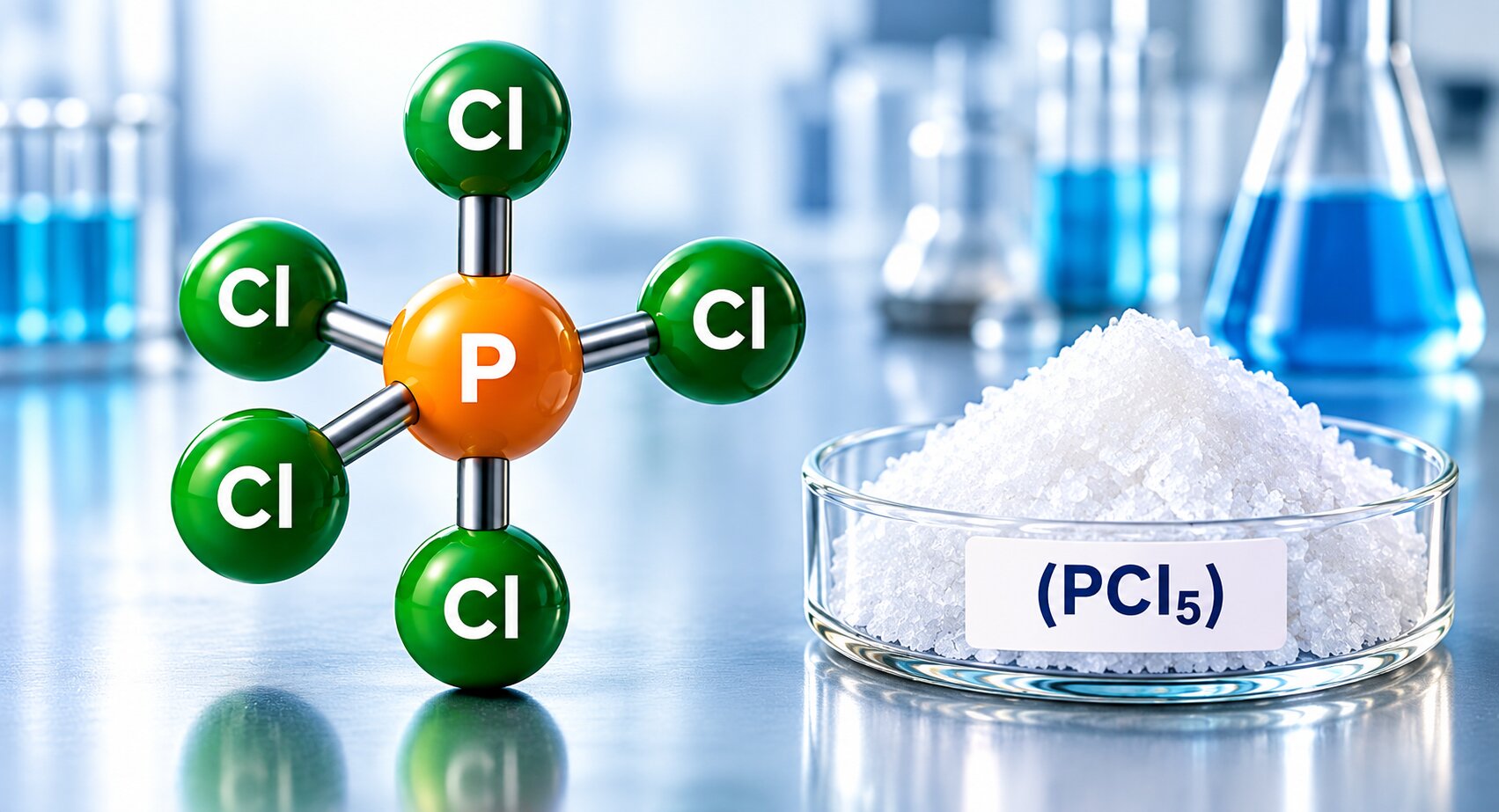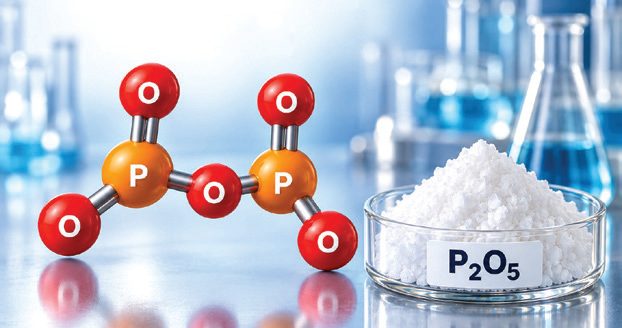
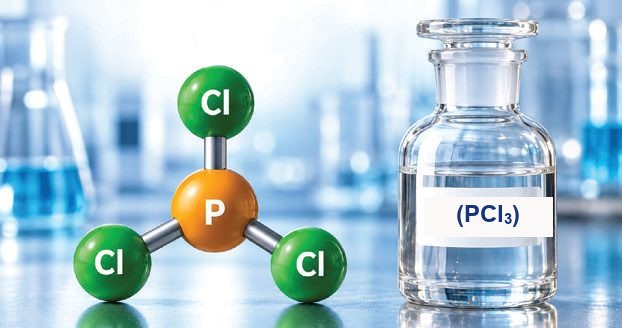
PCl3
Phosphorus Trichloride
A key phosphorus-based intermediate for agrochemicals, pharmaceutical intermediates, flame retardants, plasticizers and specialty chemicals.
A high-purity specialty chemical for pharma, semiconductor, agrochemical and organic synthesis, and an essential reagent for APIs.
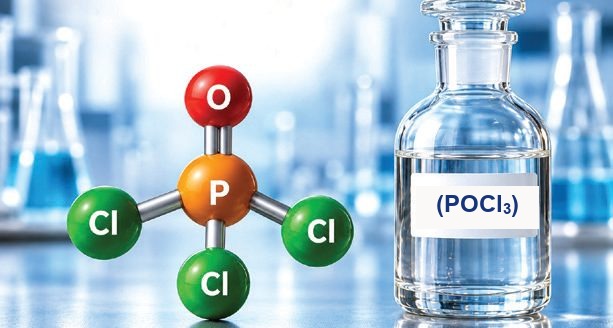
Phosphorus Oxychloride (POCl3), CAS 10025-87-3 and HSN 28121200, is manufactured by Shreeyansh Labs at Kucharam, Medak, Telangana. A high-purity specialty chemical for pharma, semiconductor, agrochemical and organic synthesis, and an essential reagent for APIs. Installed capacity: 6,000 MT p.a..
Phosphorus Oxychloride (POCl3), also called Phosphoryl Chloride, is a high-purity specialty chemical used wherever a clean, powerful chlorinating or phosphorylating reagent is needed. It is an essential reagent in the synthesis of many active pharmaceutical ingredients (APIs), a dopant source in semiconductor manufacturing, and a raw material for specialty phosphate esters and agrochemicals.
In semiconductor fabrication, POCl3 is the phosphorus source in the diffusion process that creates N-type silicon. These N-type wafers are the foundation of integrated circuits, microprocessors, memory chips, power devices, MEMS sensors and advanced solar cells. Electronic-grade POCl3 must be ultra-pure (99.999% or higher) with very low metallic impurities and moisture, and India currently depends largely on imports for this grade.
Shreeyansh Labs has 6,000 MT per annum of POCl3 capacity and is equipped with a suitable distillation reactor to manufacture POCl3 of high purity. As India builds domestic semiconductor capacity under the India Semiconductor Mission, locally produced POCl3 offers shorter supply chains and a dependable local partner.
A key reagent for Vilsmeier-Haack formylation, chlorination of heterocycles and dehydration steps in API manufacture.
Phosphorus dopant source for N-type silicon wafers used in ICs, memory, power devices and sensors.
Used in the phosphorus-diffusion step of crystalline-silicon photovoltaic cell production.
Raw material for phosphate esters used as flame retardants, plasticizers and hydraulic-fluid additives.
Reagent in the synthesis of phosphorus-containing pesticides and herbicides.
Widely used as a dehydrating and chlorinating agent in fine-chemical routes.
| Appearance | Colourless to pale-yellow fuming liquid with a pungent odour |
|---|---|
| Molecular weight | 153.33 g/mol |
| Boiling point | approx. 105.8 °C |
| Melting point | approx. 1.25 °C |
| Density (20 °C) | approx. 1.65 g/cm³ |
| Reactivity | Reacts with water to form hydrochloric and phosphoric acids |
| Transport reference | UN 1810, Class 6.1 (toxic); confirm against the current SDS |
Values are typical literature references to help you understand the material. They are not a product specification or guarantee. Request our technical data sheet and certificate of analysis for supply specifications.
Phosphorus Oxychloride is a hazardous industrial chemical and must be handled only by trained personnel using suitable protective equipment, in well-ventilated areas, following the current safety data sheet. Keep containers tightly closed and stored dry, away from moisture, bases and other incompatible materials.
At our plant, chemicals are stored in MS and carbographite tanks designed for the purpose and fitted with protective systems. Each tank is spaced to avoid direct contact and possible reactions, and storage areas are cordoned off according to safety and environmental norms.
FAQ
POCl3 is a reagent for APIs and fine chemicals, a phosphorus dopant source for N-type silicon in semiconductor manufacturing, and a raw material for phosphate esters and agrochemicals.
The CAS number is 10025-87-3 and the Indian HSN code is 28121200.
Yes. Phosphorus oxychloride and phosphoryl chloride are two names for the same compound, POCl3.
We are equipped with a suitable distillation reactor to manufacture high-purity POCl3. For electronic-grade requirements (99.999% or higher, very low metals and moisture), please contact us to discuss your specification and qualification process.
About 6,000 MT per annum.
A key phosphorus-based intermediate for agrochemicals, pharmaceutical intermediates, flame retardants, plasticizers and specialty chemicals.
A highly effective chlorinating agent and a critical raw material for LiPF6, the electrolyte salt in lithium-ion batteries.
A versatile phosphorus intermediate and building block for phosphoric acid, polyphosphoric acid and specialty derivatives.
Tell us the grade and quantity. We respond within one working day.